

Design Guide / Kansas City
Best Hardwood Floor Stain Colors for Kansas City Homes
Choose a stain direction that works with your wood species, natural light, cabinets, furnishings, and the character of your Kansas City home.
The short answer
Start here.
The best hardwood floor stain color is the one tested on your actual floor. Natural and light warm tones keep rooms open and show more grain; medium browns such as Provincial or Special Walnut are versatile; deep brown and near-black stains create contrast but show dust and wear more readily. Red oak and white oak can make the same stain look noticeably different, so species-specific, on-floor samples are essential.
- 01Choose a color family first—natural, light warm, medium brown, or dark—then compare a small set of samples.
- 02Never select a stain from a phone screen alone; species, sanding, lighting, and finish change the result.
- 03Test the complete stain-and-finish system on your floor near fixed cabinets and in both daylight and evening light.
01
Start with a color family, not dozens of stain names
A wall of stain names can make the decision feel harder than it is. Begin by deciding how you want the room to feel. Natural and pale floors tend to feel open and relaxed. Warm light browns create softness without hiding the grain. Medium browns feel grounded and adapt to many cabinet and furniture styles. Dark stains create strong contrast and formality.
Once the direction is clear, compare three or four candidates on the actual wood. The same named stain can look tan on white oak, warmer or pinker on red oak, and deeper on a more porous board. Existing age, grain, grade, sanding sequence, water-popping, application, and topcoat all influence what the eye sees.
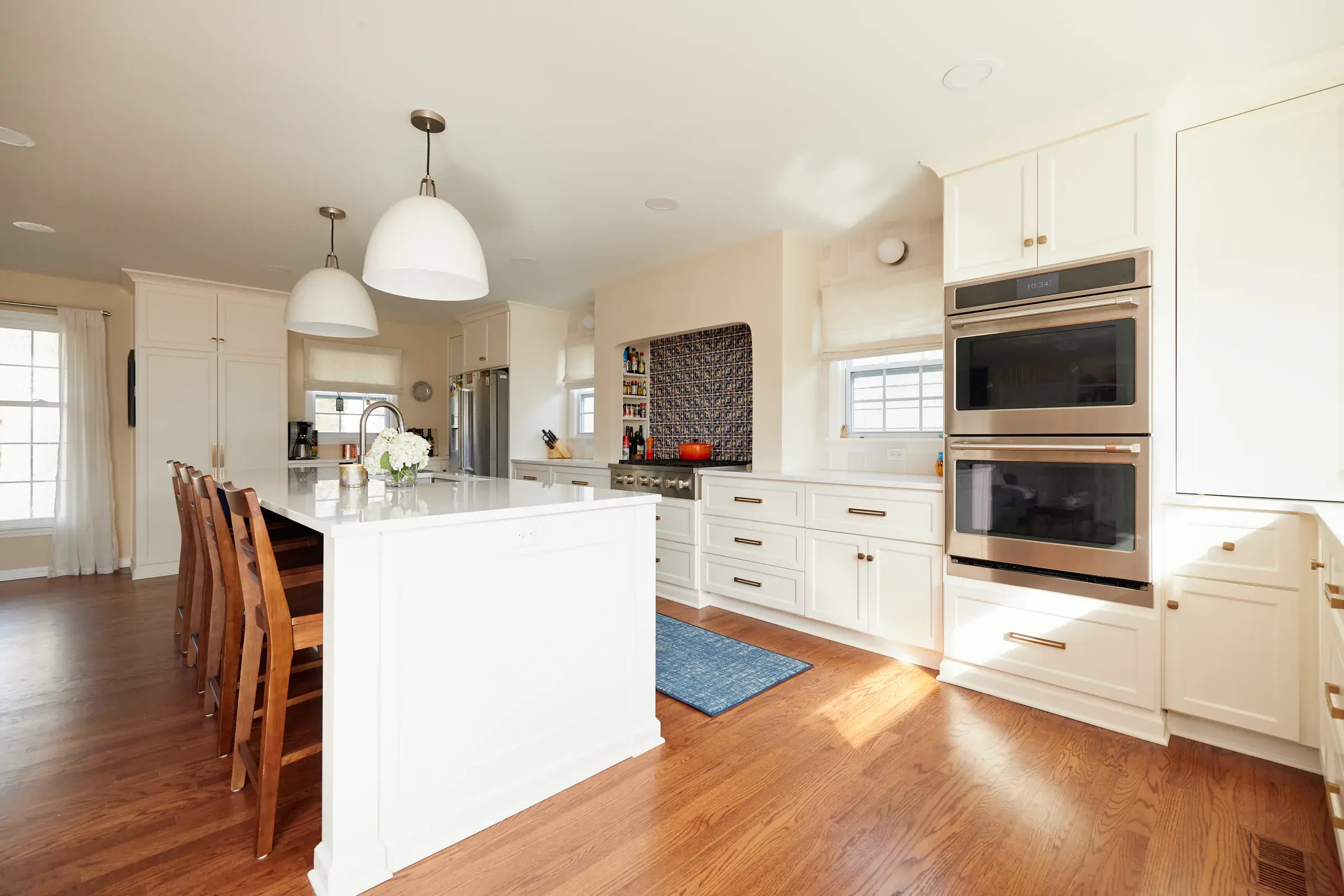
For Kansas City homes, the most durable design decisions usually respect the architecture and permanent finishes. A 1930s Brookside home, a Prairie Village ranch, and a new Leawood build can all carry beautiful oak, but they may call for different color relationships. The floor should connect the rooms rather than compete with every cabinet, stair, and piece of furniture.
| Color family | Room effect | Watch for |
|---|---|---|
| Natural / clear | Bright, honest grain, timeless | Natural undertones and topcoat ambering |
| Light warm | Soft, airy, forgiving | Pink, yellow, or gray shifts by species |
| Medium brown | Balanced, classic, versatile | Cabinet undertones and room light |
| Dark brown | Rich contrast, formal | Dust, pet hair, scratches, edge variation |
| Gray / whitewashed | Cooler, contemporary | Species reactions and trend sensitivity |
02
Natural and light hardwood floor colors
Natural floors remain popular because they preserve the identity of the wood and make it easier to coordinate changing furniture over time. A clear or nearly natural system is not colorless: the wood species, sealer, finish chemistry, and age all contribute warmth. White oak may read beige, wheat, or muted brown, while red oak can show salmon, pink, or golden notes.
Light stains and pale sealers can soften undertones while keeping the grain visible. They work especially well where the homeowner wants an open connection between kitchen, dining, and living spaces. Because light floors reveal the wood instead of covering it, board variation, mineral streaks, repairs, and mixed species can remain visible. That variation may be beautiful, but it should be understood before the full floor is finished.
A common mistake is trying to force red oak to look exactly like a social-media photo of white oak. Products and techniques can influence warmth, but the underlying species still matters. Use the inspiration image to describe direction—lighter, less red, lower contrast—not as a guaranteed formula.
- Natural or clear systems for honest grain and warmth
- Neutral and rustic beige directions for a softened natural look
- Weathered or pale brown tones for lower contrast
- Country-white or gray directions only after a large sample
- Species-aware sealers when reducing red or amber appearance
03
Why medium brown stains are so versatile
Medium browns sit between two maintenance extremes. They add enough pigment to unify some natural variation without turning every speck of dust into a high-contrast mark. Colors in the Provincial, Special Walnut, Golden Brown, Antique Brown, and medium coffee families can work across traditional and transitional interiors.
The name alone is not the design. Provincial on red oak may feel warmer and more traditional than the same color on white oak. Special Walnut can shift from a soft brown to a deeper, more varied tone depending on the board. Blends can be useful when an off-the-shelf color is close but not quite right, but the mixture should be documented so future repairs have a reference.
Medium stains can also help old and new flooring relate after a lace-in repair. Pigment does not erase different grain or age, but it may reduce the contrast between freshly milled boards and an established floor. Sanding and finishing connected areas together usually gives the best opportunity for a coherent result.
04
What to know before choosing a dark stain
Dark Walnut, Jacobean, Espresso, Ebony, True Black, and custom blends can produce a dramatic floor with strong grain contrast. They pair well with light walls and can give formal rooms visual weight. They also absorb light, so a dark floor may make a small or shaded room feel more enclosed.
Dark surfaces tend to show light-colored dust, pet hair, scratches, finish wear, and gaps more clearly. Very dark pigment can also emphasize sanding marks, edge differences, and areas where the wood absorbs stain unevenly. Preparation and sampling matter more as the target moves toward near-black.
Think beyond the reveal photo. Consider daily maintenance, pets, direct sun, high-traffic paths, and how the finish will age. A slightly lighter brown often delivers the depth a homeowner wants while remaining more forgiving in ordinary family life.
Choose dark floors for the way they live every day—not only for the contrast they create in an empty room.
05
How stain looks different on red oak and white oak
Red oak has pronounced grain and naturally warm undertones. Clear and light finishes often preserve visible red, salmon, or gold notes. Warm browns can work with those undertones, while cool gray or pale beige goals may require careful product selection and realistic expectations. Its open grain can create lively contrast that many Kansas City homeowners recognize as classic hardwood.
White oak generally has a tighter, straighter grain and more tan, olive, or neutral-brown character. It is popular for natural, beige, and muted contemporary finishes, but it is not a blank white surface. Boards vary, and tannins or mineral streaks can influence the final result.
If a home contains both species, do not assume one stain will make them identical. Large samples can show whether the goal should be a close blend, an intentional transition, or a broader refinishing plan. Noble's stain gallery displays the same DuraSeal color families on red and white oak so homeowners can compare direction before the in-home sampling stage.
06
How to test stain colors in your Kansas City home
Sample after the floor has been sanded to the planned preparation level whenever possible. A stain placed over an old finish, a different species, or a tiny loose sample may not predict the final floor. Put candidates near cabinets, stone, tile, stair parts, and large furniture that will remain. Include both a bright area and a shaded area.
View samples in morning daylight, afternoon light, and the lamps used at night. Warm bulbs can make a neutral brown appear more amber; cool daylight can reveal gray or green notes. Compare the sample with the intended topcoat because finish chemistry and sheen affect depth, warmth, and reflection.
Reduce the field deliberately. Start with a color family, choose three or four candidates, then narrow to one or two larger samples. Record the manufacturer, color, blend ratio, preparation, sealer, finish, and sheen. That information becomes part of the home's maintenance history and makes future repairs more manageable.
Noble helps homeowners across Leawood, Prairie Village, Mission Hills, Fairway, Westwood, and the wider Kansas City metro make the decision on the actual floor. The goal is not to chase a trend; it is to choose a finish that belongs with the wood, light, architecture, and family using the space.
Photograph the approved samples with labels in place, but treat those photos as documentation rather than a perfect color standard. Cameras and screens shift color. The signed sample on the actual floor remains the best reference for the crew and homeowner before full application begins.
- Test on the actual species and preparation whenever possible
- Place samples beside permanent cabinets, tile, stone, and stairs
- Review in daylight and evening artificial light
- See the sample with the intended topcoat and sheen
- Document any blend ratio and the complete finish system
Local project proof
“They worked with me to get the stain color just right by mixing stains. A year and a half later our floors still look wonderful.”
Ann Baxter / Custom stain and interlaced hardwood
View Installation and refinishing in Overland ParkQuestions homeowners ask
Design Guide FAQs
What is the most popular hardwood floor stain color?+
Natural, light warm, and balanced medium-brown directions remain broadly popular because they coordinate with many interiors. The best choice still depends on the actual species, light, cabinets, and maintenance preferences.
What stain colors reduce red oak's pink appearance?+
Muted brown, beige, or carefully selected neutral systems can reduce the visual emphasis of red undertones, but red oak cannot be guaranteed to look exactly like white oak. Test the complete system on the floor.
Does the same stain look different on red oak and white oak?+
Yes. Natural wood color, grain, density, sanding, and absorption all change the result. Side-by-side species samples are much more useful than a stain name alone.
Do dark hardwood floors show scratches?+
They often show light dust, pet hair, scratches, and finish wear more clearly than natural or medium-brown floors because the contrast is stronger.
Should stain samples include the finish coat?+
Yes. The sealer, finish chemistry, and sheen can change warmth, depth, and reflection. Evaluate the complete proposed system whenever practical.
Can Noble mix a custom hardwood stain color?+
Custom blends may be possible. The blend should be sampled on the floor and documented carefully so the approved color and complete finish system are recorded.
About the author
Clayton Rookstool
Owner-Operator, Noble Hardwoods
Clayton Rookstool leads Noble Hardwoods with a focus on careful planning, clear communication, and hardwood work designed for the way Kansas City families live.
Meet Noble HardwoodsSources & further reading
Cost figures are planning references, not a Noble Hardwoods quote. Product guidance and project conditions can change; verify details for your home.